June 22, 2026
- +1 123 456 0606
- info@PrimaCharter.com
- Mon - Fri 09:00-17:00

Words: 3035
Characters: 21722
Reading time: 14
Greece is one of the strongest destinations in the world for yacht charters, and the reason is straightforward: over 6,000 islands, most of them with anchorages that genuinely cannot be reached any other way. You can sail for a week in the Cyclades and anchor every night in a different bay, cover 200 miles and feel like you have seen ten different countries in the same archipelago. That combination of accessibility, variety and weather consistency is why the Greek charter market is one of the most developed in Europe.
The all-inclusive model solves the main logistical challenge: you get the yacht, the crew, the food, the fuel and the planning in a single package. The quality difference between charter companies is real and visible in the food, the crew professionalism and the condition of the yacht. This guide covers what is actually included, what the costs look like in 2026, how to choose between the main sailing regions, and what to watch out for before you book.
About this guide. Prices and availability change by season and year. Always confirm current rates, inclusions and APA (Advance Provisioning Allowance) requirements directly with your charter broker or company before booking.
What you need to know before booking
Typical weekly cost (crewed)€10,000 – €30,000+ depending on yacht size
Best value seasonMay or late September – fewer crowds, lower rates
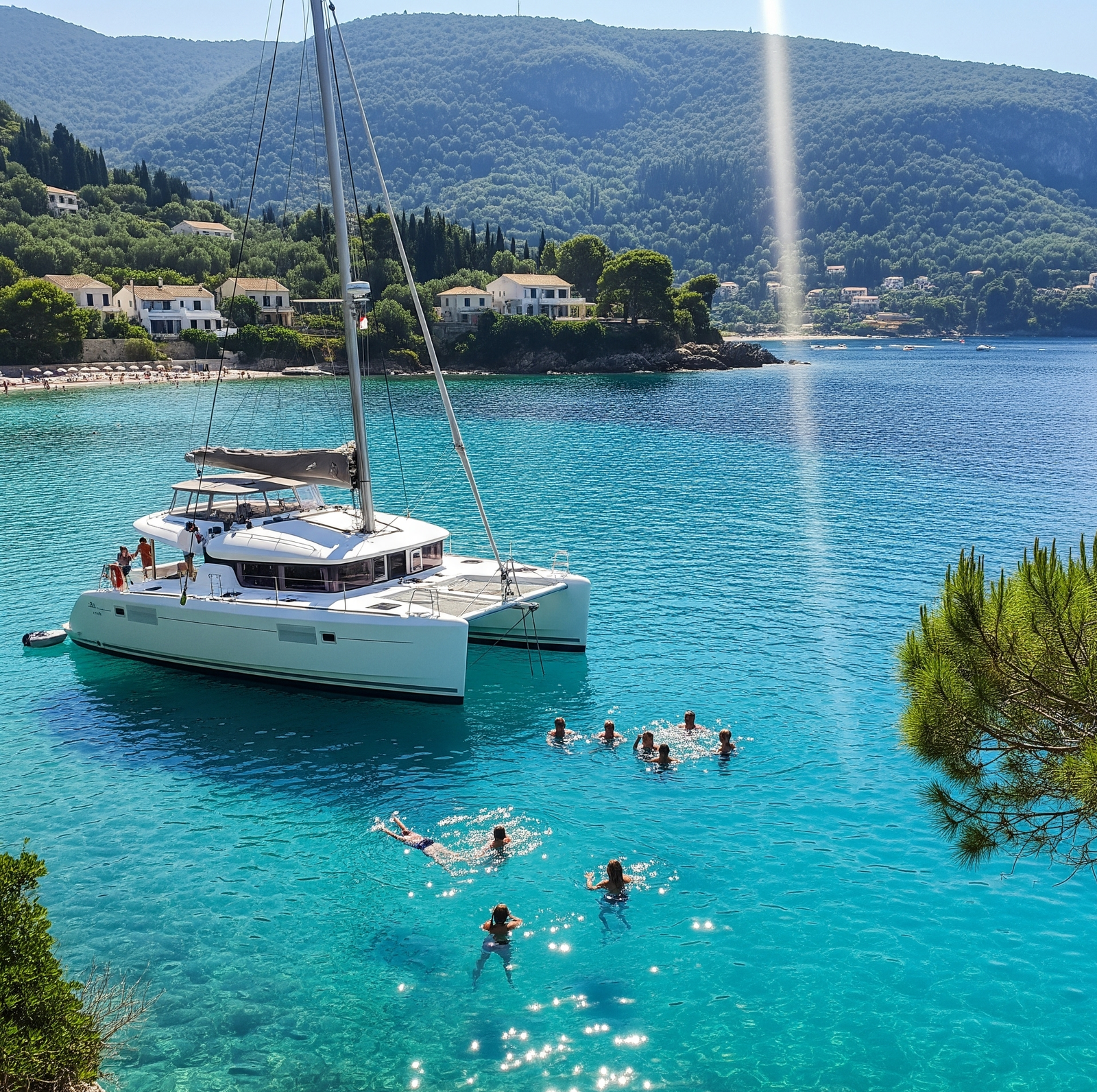
Best region for calm sailingIonian Sea – protected bays, lighter winds
Best region for island varietyCyclades – Mykonos, Santorini, Paros
APA (extra expenses budget)Typically 30-35% of base charter fee
Booking lead time (peak season)6-12 months ahead for July and August
The term “all-inclusive” varies significantly between charter companies. A true all-inclusive package covers everything with no surprises at the end of the week. Many charters that use the phrase still operate on an APA (Advance Provisioning Allowance) model, where guests pay a lump sum upfront – usually 30-35% of the base charter fee – to cover fuel, port fees, food and drinks, with any remainder returned at the end of the charter.

✅ What a genuine all-inclusive charter covers
⚠️ What often costs extra – even on “all-inclusive” packages – full cautions guide →
The two main sailing regions in Greece are different enough that the choice should be made deliberately rather than by default. The Cyclades and the Ionian Sea attract different types of sailors and offer different experiences for the same week of charter time. Both regions have their own guide: see our Cyclades yacht charter guide and Ionian yacht charter guide for full itinerary and anchorage detail.
| Cyclades | Ionian Sea | |
|---|---|---|
| Islands | Mykonos, Santorini, Paros, Naxos, Delos | Corfu, Lefkada, Kefalonia, Zakynthos, Ithaka |
| Wind conditions (summer) | Meltemi wind July-August: strong, consistent, can be challenging. Better in May-June and September | Lighter and more predictable. Protected bays make for easier anchoring and calmer passages |
| Best for | Experienced sailors, island-hopping variety, nightlife, iconic photography destinations | Families, first-time charterers, couples, those who prefer green landscapes to white-washed villages |
| Crowds (peak season) | Busy. Santorini and Mykonos are extremely crowded in July and August | Less crowded than the Cyclades. More space at popular anchorages |
| Cuisine focus | Cycladic seafood, fresh grilled fish, island-specific dishes (fava from Santorini, loukoumades) | Ionian cooking: bourdeto (spiced fish stew), sofrito (Corfu beef), fresh olive oil, local wines |
| Flying into | Athens, then ferry or small flight to starting island | Corfu, Kefalonia or Lefkada (Preveza airport) directly |
| Sailing experience required | Higher – Meltemi can reach Force 6-7 in summer | Lower – recommended for first charters or family groups |
The Meltemi wind – what Cyclades sailors need to know
The Meltemi is a reliable north-to-north-west wind that blows across the Aegean from July through August. It can be excellent for sailing performance but makes some anchorages uncomfortable and some passages challenging for less experienced sailors or those prone to seasickness. In the central Cyclades, it typically builds from midday and drops towards evening. Planning passages for morning departures and anchoring by early afternoon is standard practice during Meltemi season. If your charter group includes non-sailors or children, the Ionian or a May/September Cyclades window is the more sensible choice.
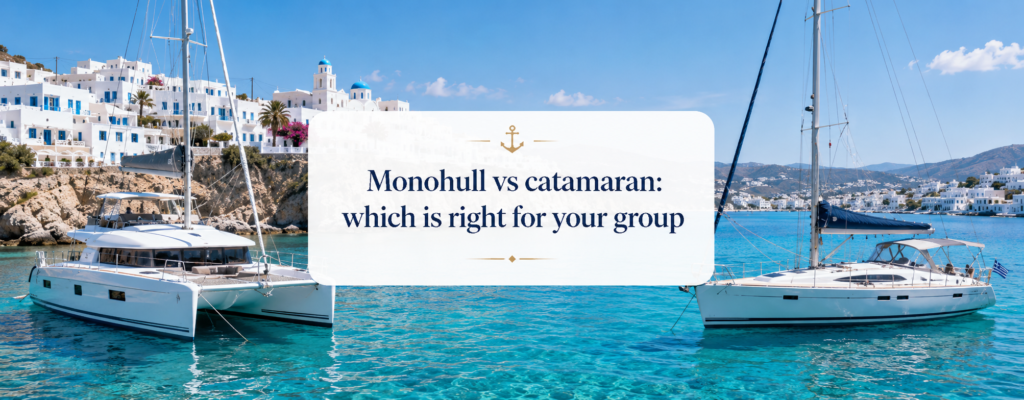
⛵ Monohull – traditional sailing experience
🚢 Catamaran – comfort and space
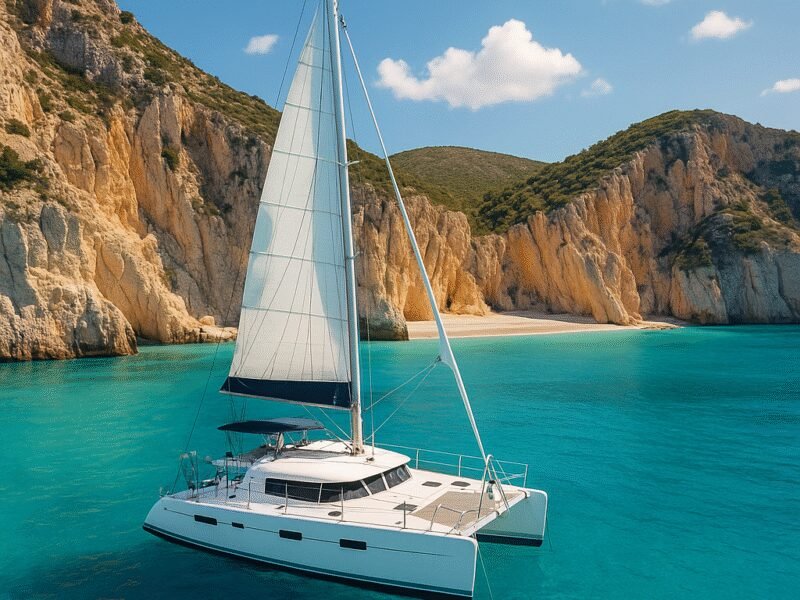
For a full cost comparison including charter fees, berth charges and seasonal differences between the two formats, read our detailed catamaran vs monohull charter guide.
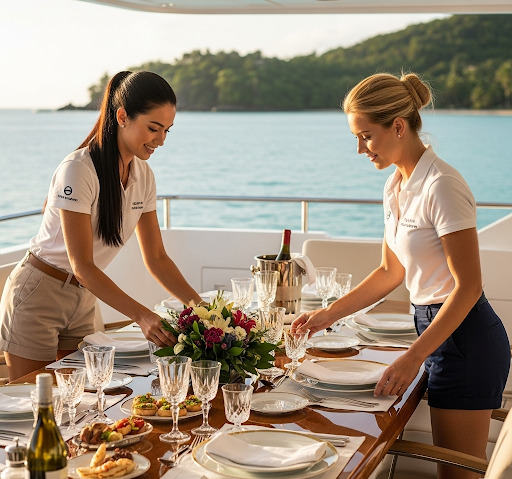
On a crewed all-inclusive charter, the crew is the most significant variable in the quality of your experience. If you are still deciding whether a crewed arrangement is right for your group, our guide to why to choose a crewed catamaran in Greece covers the full case. The yacht can be beautiful and the itinerary excellent, but a poor captain or an uninspired chef will define the week more than any other factor. Knowing what to look for in a crew profile before booking saves disappointment.

What to look for in a charter crew
Food on an all-inclusive crewed charter varies considerably. At the top end, a professional chef will consult with guests before departure on dietary preferences, plan menus around the local market availability at each port, and produce restaurant-quality meals in a yacht galley. For a deeper look at what onboard chefs actually do and how to brief them well, see our guide to crewed charters with an onboard chef. At the lower end, meals are functional but uninspired. The culinary experience is worth asking about specifically rather than assuming the included-chef standard.

🐟 What to expect on a quality charter
Meals per day
3 + snacks
Sourcing
Daily at port markets
Dietary
Pre-charter consultation
A serious charter chef buys fresh at each island’s market or fish landing. Expect seafood caught locally, seasonal vegetables, Greek cheeses and bread from the port bakery. Menus change daily based on availability. A good pre-departure discussion about preferences and restrictions is standard practice.
🍷 Cycladic cuisine highlights
Key ingredient
Fresh seafood
Wine
Assyrtiko (Santorini)
Island specialty
Santorini fava
Cycladic cooking is lighter and seafood-focused. Grilled octopus, freshly caught red mullet, Naxos cheese, tomato fritters from Santorini and the island’s renowned Assyrtiko white wine are the highlights. A chef sourcing at the Mykonos or Naxos morning market has access to exceptional ingredients.
🫒 Ionian cuisine highlights
Key ingredient
Olive oil + herbs
Dish
Sofrito (Corfu)
Influence
Venetian via centuries
Ionian cooking reflects centuries of Venetian influence alongside Greek tradition. Sofrito (braised beef in white wine and garlic) from Corfu, bourdeto (spiced fish stew) from Corfu, fresh local olive oil and Robola wine from Kefalonia are the regional markers a charter chef can work with particularly well.
Charter pricing in Greece runs across a wide range, but the headline figure is rarely the complete cost. Understanding the full structure before signing avoids surprises at the end of the week. For a comprehensive breakdown across yacht types and regions, see our complete guide to yacht charter costs in Greece.
| Cost element | Typical range | Notes |
|---|---|---|
| Base charter fee (crewed, per week) | €10,000 – €30,000+ | Varies with yacht size, age, specification and season. Larger yachts (50ft+) sit at the upper range. |
| APA (Advance Provisioning Allowance) | 30-35% of base fee | Covers fuel, port fees, food and drinks. Any unspent portion is returned at charter end. APA does not equal extra profit for the operator. |
| Crew gratuity | 10-15% of base fee | Standard practice, not obligatory, but expected. To be paid directly to crew at charter end based on satisfaction. |
| Fuel surcharge (if applicable) | €500 – €1,500 | Some charters bill fuel separately from APA. Confirm whether this applies before signing. |
| Shoreside meals and activities | Variable | Restaurant meals, private tours and island activities are not covered by the charter or APA. |
| Total realistic budget (all-in, per week) | €13,500 – €42,000+ | Base fee plus APA plus gratuity. Per-person cost for a group of 8 can range from €1,700 to €5,000+ depending on yacht and season. |
Best times to book – and the September case – full month-by-month guide →
High season (July-August) commands peak prices and fills up 6-12 months in advance. June and September are the most recommended alternative windows among experienced charterers: the weather is excellent, the Meltemi in the Cyclades is calmer in September, the anchorages are less crowded and prices drop by 15-25% compared to peak. May is excellent for the Ionian. Winter charters (November-March) are significantly cheaper but weather reliability is lower and many island facilities are closed.
Define your group and priorities before contacting anyone
Work with a charter broker rather than booking direct
Read the charter contract carefully before signing
Complete the Preference Sheet thoroughly before departure
A bareboat charter means you rent the yacht only – no crew included. You are responsible for sailing it yourself, planning your own provisions and dealing with any technical issues. This requires sailing qualifications and experience. A crewed charter (which is what this guide covers) includes a professional captain and additional crew. An all-inclusive crewed charter adds food, drinks and fuel to that package. For most first-time charterers, a crewed arrangement is the right starting point.
APA stands for Advance Provisioning Allowance. It is an upfront payment – typically 30-35% of the base charter fee – held by the captain to cover running costs during the charter: food, drinks, fuel and port fees. The captain keeps receipts and provides a full account at the charter end. Any unspent APA is returned to you. If the charter runs over the APA amount (due to extensive motoring, for example), you pay the difference. Some genuine all-inclusive packages fix these costs in the base fee – confirm which model applies before signing.
Smaller yachts (around 40-45ft) typically accommodate 4-6 guests in 2-3 cabins. Larger yachts (50-60ft) can host 8-10 guests in 4-5 cabins. Catamarans of similar length generally offer more cabin space than monohulls. The number of heads (bathrooms) matters as much as cabins for group comfort – confirm both before booking.
For July and August, particularly in the Cyclades, 6-12 months in advance is realistic for the better yachts and crews. May, June and September have more flexibility. Winter charters are almost always available with short notice. Early booking also gives you more options for itinerary discussions with the captain rather than working around whatever the previous charter’s positioning dictates.
On a quality all-inclusive charter, expect three meals daily with a focus on fresh local ingredients sourced at each island’s market. Breakfast is usually lighter and flexible; lunch is often simple salads, sandwiches or lighter dishes eaten at anchor; dinner is the main meal and where the chef’s capability shows. Dietary restrictions, allergies and strong preferences are communicated via the Preference Sheet before departure and accommodated by any competent charter chef. The quality of onboard food is directly linked to the chef’s training and experience – worth asking about specifically.
The Greek charter market is one of the most developed in the Mediterranean for a reason. Two distinct sailing regions, consistent summer weather, anchorages that are genuinely unreachable any other way, and a food culture worth building an itinerary around. The all-inclusive model removes the main planning friction – you are not calculating fuel costs mid-passage or negotiating with a marina for a berth at 6pm. The week runs on a structure that was agreed before you boarded, which is how a sailing holiday is supposed to work.

The decisions that actually determine the quality of your charter are made before departure: which region suits your group’s sailing experience and pace, whether a catamaran or monohull fits the way you want to spend the week, what the crew’s background is and whether the chef has been briefed properly. Getting those right matters more than the yacht’s brochure photography or the headline price.
September remains the best month for most groups – calmer Meltemi in the Cyclades, less pressure on anchorages, better availability on the yachts that sell out in July. The Ionian in May is equally strong for families or first-time charterers. Neither window requires the six-month advance booking that August demands.
If you are ready to compare options, check availability or talk through which region and yacht type fits your group, Prima Charter’s planning team can advise on current fleet availability across both the Cyclades and the Ionian. For official Greek island destination information, the Greek National Tourism Organisation is a useful starting reference for travel planning.
Susan Johnson is the first mate at Primacharter, and the one making sure the entire experience feels smooth from the very first interaction.
She looks after everything behind the scenes - client communication, bookings, planning, and the website itself. If something feels easy, clear, and well thought out, it’s because she’s already spent time refining it.
Onboard, Susan brings a calm, attentive presence that guests immediately feel comfortable around. She notices the small details, the timing, the atmosphere - things that don’t ask for attention, but make all the difference.
Her background in administration and web development gives her a practical edge, but it’s her sense of care and quiet precision that defines her work. Nothing is rushed, nothing is overlooked.
Susan’s focus is simple: to make sure every part of the journey feels considered, seamless, and genuinely enjoyable - from the first enquiry to the final day on the water.